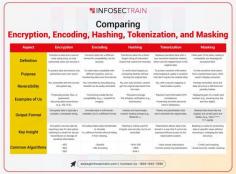
In today’s data-driven world, knowing which standard or framework applies to your business is crucial. Here's a quick comparison to help you navigate the landscape:

Thumb

0 repins 0 comments

IPv4 vs. IPv6 represents the evolution of internet addressing. IPv4 (Internet Protocol version 4) uses a 32-bit address system, allowing around 4.3 billion unique addresses, which are now nearly exhausted due to the rapid growth of internet-connected devices. IPv6 (Internet Protocol version 6), on the other hand, uses a 128-bit address system, providing an almost limitless number of unique IP addresses. Besides expanded address space, IPv6 offers improved security, faster routing, and more efficient network management, making it the future standard for global internet communication.

Thumb

0 repins 0 comments

Free Masterclass For AI-Powered Cloud Security: Tools & Trends in 2026 Date: 04 Nov (Tue) Time: 8 – 10 PM (IST) Speaker: Amit ➡️ Agenda for the Webinar ✅ Exploring the AI • Understanding the AI • Machine Learning vs Deep Learning vs Generative AI • Overview of AI ecosystems: OpenAI, TensorFlow, PyTorch, Hugging Face • Role of AI in cloud-native environments ✅ Cloud ML & AI Ecosystems Overview • Exploring the Machine learning Service in the Cloud • Exploring the AI service in the Cloud • Understanding SageMaker Service and its use case • Understanding Bedrock and it’s Use Cases ➡️ Why Attend This Webinar • Get CPE Certificate • Learn from Industry Experts • FREE Career Guidance & Mentorship Register Now: https://www.infosectrain.com/events/ai-powered-cloud-security-tools-trends-in-2026/

Thumb

0 repins 0 comments

Thumb

0 repins 0 comments

Thumb

0 repins 0 comments

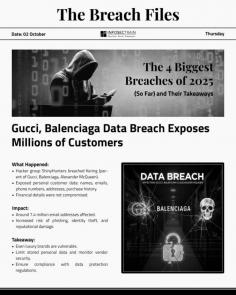
Gucci & Balenciaga have joined the breach list of 2025. Hacker group

Thumb

0 repins 0 comments

AI-generated deepfakes are redefining cyber risk — blurring reality and fueling identity theft, financial fraud, and corporate deception.

Thumb

0 repins 0 comments

The dark web hosts a wide range of hidden resources that are valuable for Open-Source Intelligence (OSINT) investigations. From underground forums, leak sites, and marketplaces to specialized search engines and databases, these resources provide insights into cybercriminal activities, data breaches, and threat actors. Exploring the Top 20 Dark Web Resources for OSINT helps security professionals, researchers, and investigators gather actionable intelligence, strengthen threat detection, and improve overall cybersecurity strategies.

Thumb

0 repins 0 comments

Thumb

0 repins 0 comments

Linux commonly uses ext4, XFS, or Btrfs, which are designed for stability, security, and better handling of large files. These file systems support advanced features like journaling, symbolic links, and case sensitivity. Windows, on the other hand, mainly uses NTFS, which offers good compatibility, built-in encryption, and strong support for permissions but is less flexible than Linux file systems. In general, Linux file systems are preferred for servers and performance-heavy tasks, while NTFS is optimized for desktop use and Windows environments.

Thumb

0 repins 0 comments

ISO standards for information and cybersecurity provide globally recognized frameworks to protect sensitive data and manage cyber risks effectively. Key standards like ISO/IEC 27001 focus on building and maintaining an Information Security Management System (ISMS), while others such as ISO/IEC 27002, 27017, and 27018 offer guidelines for controls, cloud security, and data privacy. By adopting these standards, organizations strengthen their security posture, ensure regulatory compliance, and build trust with customers in today’s evolving threat landscape.

Thumb

0 repins 0 comments

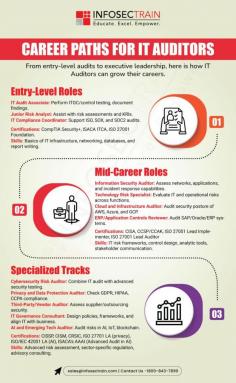
From testing IT controls to leading enterprise-wide risk programs, the IT Audit career path is full of opportunities! ✅ Entry-Level: ITGC testing, compliance support, Security+ & ISO 27001 Foundation ✅ Mid-Career: Risk assessments, cloud audits, ERP reviews, CISA & CCSP ✅ Specialized Tracks: Cybersecurity, Privacy, Vendor, AI & Emerging Tech audits, CISSP & ISO/IEC 42001 Whether you’re just starting or aiming for leadership, IT Audit offers diverse paths to grow your skills, certifications, and impact.

Thumb

0 repins 0 comments

Free Masterclass on ISACA CRISC Old vs New: Latest Updates & Exam Changes

Thumb

0 repins 0 comments

Business Continuity Plans (BCP), Disaster Recovery Plans (DRP), and Crisis Management Plans (CMP) serve different but complementary roles in organizational resilience. A BCP ensures that critical business operations continue with minimal disruption during unexpected events. A DRP focuses specifically on restoring IT systems, data, and infrastructure after incidents like cyberattacks or system failures. A CMP, on the other hand, provides a structured response to managing communication, leadership decisions, and stakeholder trust during crises. Together, they form a comprehensive resilience strategy.

Thumb

0 repins 0 comments

SOC Essentials 101: Skills, Roles, and Incident Response

Thumb

0 repins 0 comments

Data protection involves the policies and procedures used to secure digital information against unauthorized access, corruption, or loss. It focuses on maintaining the confidentiality, integrity, and availability (CIA) of data throughout its lifecycle. This process includes technical measures like encryption and access controls, as well as organizational practices like regular backups and incident response planning. Ultimately, data protection ensures that sensitive information remains secure and trustworthy, safeguarding both individual privacy and business continuity.

Thumb

0 repins 0 comments

SAST, DAST, IAST, and RASP are application security testing methods used throughout the software lifecycle. SAST (Static Application Security Testing) analyzes code before it runs to find vulnerabilities, while DAST (Dynamic Application Security Testing) tests a running application externally, mimicking a hacker. IAST (Interactive Application Security Testing) combines both, analyzing a running application from the inside. Lastly, RASP (Runtime Application Self-Protection) is a self-defense mechanism that protects the application from attacks in real-time, directly in the production environment.

Thumb

0 repins 0 comments

Red teamers, or ethical hackers, use a specialized toolkit of powerful weapons to simulate real-world cyberattacks and test an organization's defenses. These tools often include Metasploit, a widely-used framework for exploiting vulnerabilities; C2 (Command and Control) frameworks like Cobalt Strike and PoshC2 for maintaining persistence and controlling compromised systems; and OSINT (Open-Source Intelligence) tools such as Maltego and theHarvester for reconnaissance to gather information on targets before an attack.

Thumb

0 repins 0 comments

Red teamers, or ethical hackers, use a specialized toolkit of powerful weapons to simulate real-world cyberattacks and test an organization's defenses. These tools often include Metasploit, a widely-used framework for exploiting vulnerabilities; C2 (Command and Control) frameworks like Cobalt Strike and PoshC2 for maintaining persistence and controlling compromised systems; and OSINT (Open-Source Intelligence) tools such as Maltego and theHarvester for reconnaissance to gather information on targets before an attack.

Thumb

0 repins 0 comments

The European Data Protection Board (EDPB) plays a vital role in ensuring consistent application of the General Data Protection Regulation (GDPR) across the EU. Its key tasks include issuing guidelines, recommendations, and best practices, advising the European Commission on data protection matters, resolving disputes between national supervisory authorities, and promoting cooperation to safeguard individuals’ privacy rights.

Thumb

0 repins 0 comments

Traditional cybersecurity relies on predefined rules, signatures, and manual monitoring to detect and stop threats, but it often struggles against evolving and sophisticated attacks. In contrast, AI-powered cybersecurity uses machine learning and automation to analyze vast amounts of data, identify anomalies, and predict threats in real time. While traditional methods provide a strong foundation, AI-driven approaches offer faster detection, adaptive defense, and proactive threat hunting, making them more effective against today’s dynamic cyber risks.

Thumb

0 repins 0 comments

SOC Interview Prep Masterclass: Most Asked Questions, Tips & Tricks

Thumb

0 repins 0 comments

Python powers the AI revolution with a wide range of libraries designed for machine learning, deep learning, and data processing. The top Python libraries for AI include TensorFlow, PyTorch, Scikit-learn, Keras, NumPy, and Pandas, each offering powerful tools for building intelligent applications. These libraries simplify tasks such as model training, natural language processing, computer vision, and data analysis, making Python the most popular language for AI development in 2025.

Thumb

0 repins 0 comments

Cyber threats are evolving fast – and so should your defense strategy. InfosecTrain’s

Thumb

0 repins 0 comments

CrowdStrike and Microsoft Defender for Endpoint are both leading endpoint protection solutions, but they differ in approach and strengths. CrowdStrike Falcon is a cloud-native platform known for its lightweight agent, advanced threat intelligence, and strong EDR (Endpoint Detection & Response) capabilities, making it ideal for organizations prioritizing speed and proactive threat hunting. Microsoft Defender for Endpoint, on the other hand, integrates seamlessly with the Microsoft ecosystem, offering solid protection, built-in automation, and cost-effectiveness for businesses already using Microsoft 365.

Thumb

0 repins 0 comments

Free Masterclass on Securing Azure Inside Out: AZ-104 & AZ-500 in One Go

Thumb

0 repins 0 comments

Cybersecurity Certifications Roadmap for 2025 highlights the essential credentials professionals should pursue to advance their careers in the evolving cyber landscape. With growing demand for security expertise, certifications like CompTIA Security+, CEH, CISSP, CISM, CCSP, and advanced cloud or AI-driven security credentials are gaining importance. This roadmap helps learners choose the right certification path based on career goals—whether in ethical hacking, cloud security, governance, or threat hunting—making it easier to stay competitive in 2025’s cybersecurity job market.

Thumb

0 repins 0 comments

The Red Team Attack Lifecycle is a structured approach that simulates real-world cyberattacks to assess an organization’s security posture. It typically includes stages such as reconnaissance (gathering intelligence about the target), initial access (exploiting vulnerabilities to gain entry), establishing persistence (maintaining access), privilege escalation (gaining higher-level control), lateral movement (spreading within the network), and finally exfiltration or impact (stealing data or demonstrating objectives). By following this lifecycle, red teams provide organizations with valuable insights into weaknesses, helping strengthen defenses against advanced threats.

Thumb

0 repins 0 comments

Top log terminologies in cybersecurity include essential terms like event logs (records of system activities), timestamps (time of event occurrence), log sources (devices or applications generating logs), severity levels (event importance), log parsing (structuring log data), and log correlation (linking related events). Understanding these terminologies is crucial for effective log management, threat detection, and incident investigation in security operations.

Thumb

0 repins 0 comments

Tools used in Advanced Cyber Threat Hunting and DFIR Training include powerful platforms like SIEM solutions (Splunk, ELK Stack), endpoint detection tools (CrowdStrike, Carbon Black), memory forensics frameworks (Volatility), network analysis tools (Wireshark, Zeek), and threat intelligence platforms (MISP, ThreatConnect). These tools help analysts detect, investigate, and respond to sophisticated cyber threats by enabling real-time monitoring, deep forensics, and proactive hunting of malicious activity.

Thumb

0 repins 0 comments

Next Page