
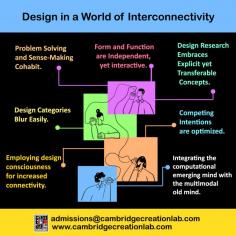
Design thinking, a method of creative and collaborative problem-solving rooted in design practices, is increasingly being applied in areas such as social science research, food production, and product design and development to spur innovation and streamline the creation process. This approach is extending beyond traditional design disciplines to tackle complex challenges in social and ecological systems. It promotes interdisciplinary collaboration, enabling diverse perspectives to converge on solutions that are both innovative and sustainable. By incorporating empathy and user-centered insights, design thinking enhances understanding of the needs and behaviors of stakeholders involved in these intricate systems. This collaborative effort brings together varied expertise, paving the way for innovative and sustainable solutions that are crucial in today’s interconnected world.
At Cambridge Creation Lab, we advocate for the integration of unique research and contemplative activities within the framework of design thinking. A hybrid design thinking approach emerges, serving as a more effective tool for framing, contextualizing, and resolving such challenges within teams. The Hybrid Design Thinking Approach, developed by the Cambridge Creation Lab, is a novel approach that combines specialized research with thoughtful activities, enabling teams to solve problems more effectively. This synthesis of research-driven insights and reflective practices highlights the potential for more effective teamwork and creative problem resolution in today’s ever-evolving landscape.
